The Column of Progress balanced the Fountain of Energy at the far north end of the fair's main axis, standing on the Esplanade at the entrance to the Forecourt of Stars. A. Stirling Calder proposed it, and William Symmes Richardson of McKim, Mead & White designed it as the bay-side approach to their Court of the Universe. According to Barry, the firm declared it an "ideal feature" of that approach. The critic Eugen Neuhaus, quoted by Todd, believed it was the first column anywhere "whose design was inspired by a purely imaginative motive," and the first sculptured column at any exposition.
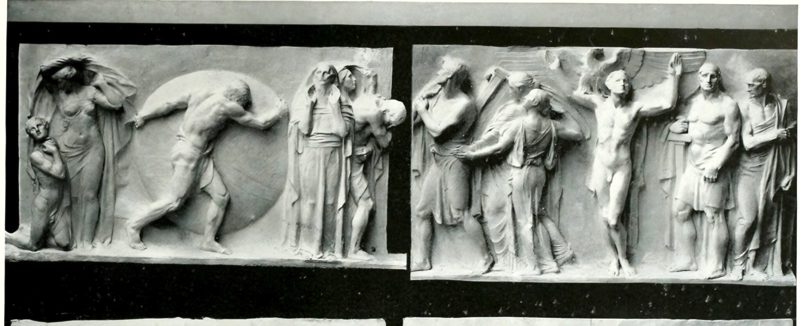
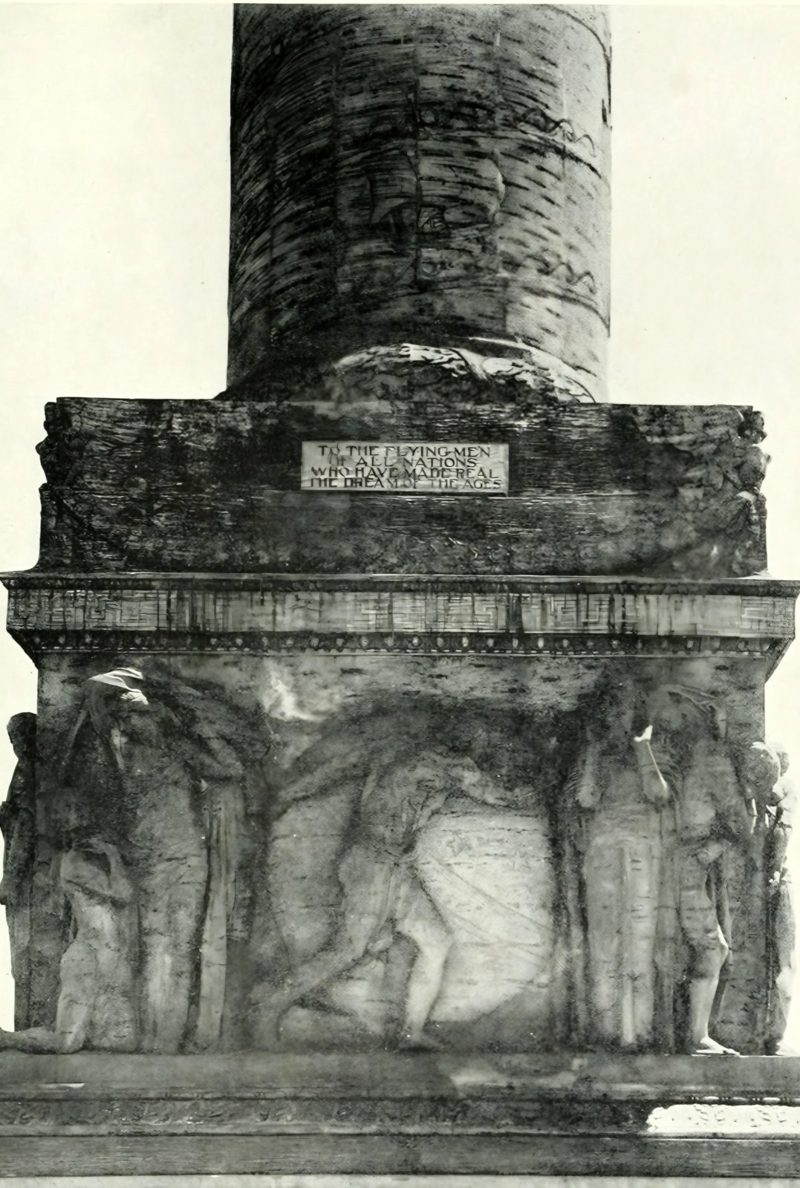
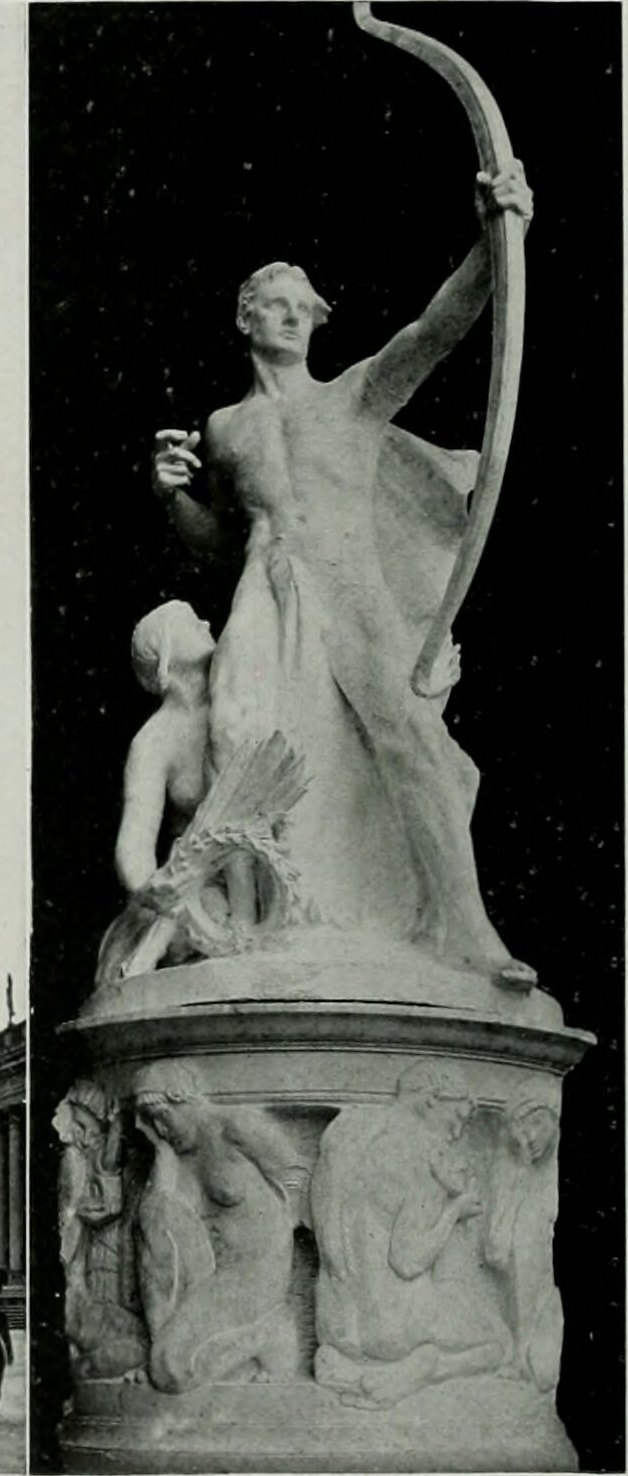
Konti's pedestal reliefs showed the labors and aspirations of men. A helical band of ships in low relief wound up the shaft like Trajan's column in Rome, and at the top a ring of straining toilers held up MacNeil's Adventurous Bowman, who had just loosed his arrow toward the bay. Barry's architect-companion suggested that it would not exist "if Trajan had not built his column in Rome nearly two thousand years ago."
Each evening the illumination began at 7:30 with a single beam on the Bowman. On July 13, 1915, at a special day devoted to aviation, tablets were unveiled on the cornice above the pedestal frieze. The one on the north face read "to the flying men of all nations, who have made real the dream of the ages."
The gulls wheel and scream about the Column of Progress.
Frank Morton Todd, The Story of the Exposition, vol. 2, ch. L (1921), written about 1920 when it still stood