Everything a writer needs, on one page, without having to ask. Take what you want: the stills below are free to reproduce, the text can be quoted or rewritten, and nothing here needs clearing with anybody. If you need something that is not here, write to hello@288days.com and you will get an answer the same day.
Logline
San Francisco built a city of domes on the edge of the Bay in 1915, lived in it for 288 days, and tore nearly all of it down.
Synopsis
Short. Nine years after the earthquake and fire, San Francisco built a world's fair on made ground at the edge of the Bay: eleven exhibit palaces, a 435-foot tower hung with a hundred thousand pieces of cut glass, and an amusement street seven blocks long. Almost nineteen million admissions were counted. Within fourteen months of the closing nearly all of it was gone. A neighborhood stands on it now.
Longer. 288 Days is a history of the Panama-Pacific International Exposition told almost entirely in the pictures and words the fair left behind: the plates of its own view books, the reels its visitors shot, and the letters, speeches and official histories of the people who built it. It follows the fair from R. B. Hale's 1904 letter proposing it, through the building of a city on pumped bay mud, to the night the lights went out on December 4, 1915, and the demolition that followed. It does not present the fair as only beautiful: the color line in its hiring and its shows, the deportation of the Somali Village, and the eugenics exhibit in the Palace of Education are all in it. The film ends on the one building of the eleven still standing, and on a boy of thirteen who had a season ticket and went nearly every day, and who turned out to be Ansel Adams.
The facts
| Title | 288 Days |
|---|---|
| Director, writer | Keith Adler |
| Production | Hollow House Films, San Francisco |
| Runtime | 138 minutes (current cut) |
| Release | February 20, 2027, free online at 288days.com. a hundred and twelve years to the day after the gates opened, and, like that day, a Saturday |
| Status | Rough cut, online now and watchable. Present-day footage, the final narration and a finishing pass still to come |
| Language | English |
| Sources | 26 period reels and several hundred photographs, plates and autochromes, nearly all public domain |
| Contact | hello@288days.com |
Stills
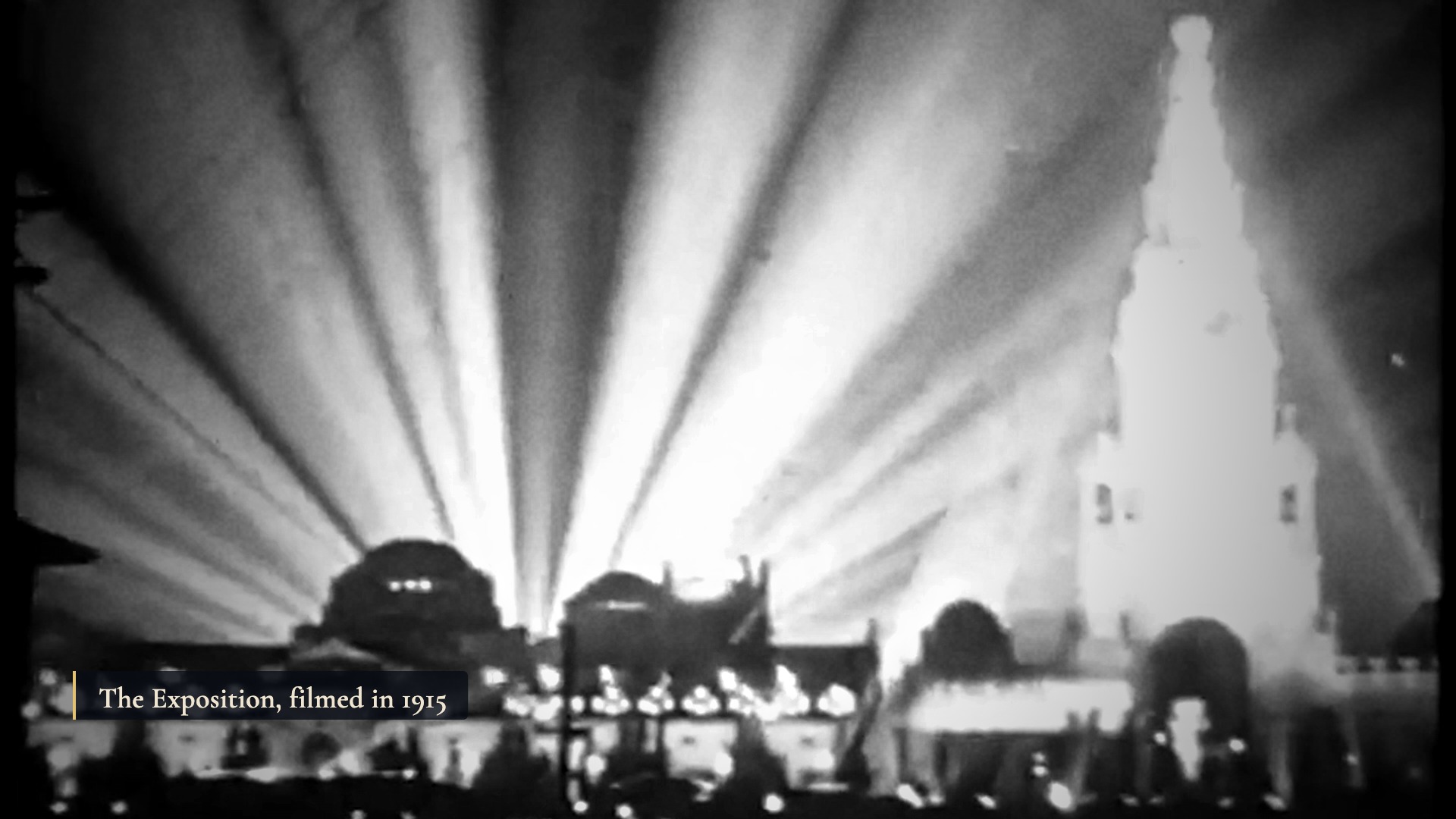
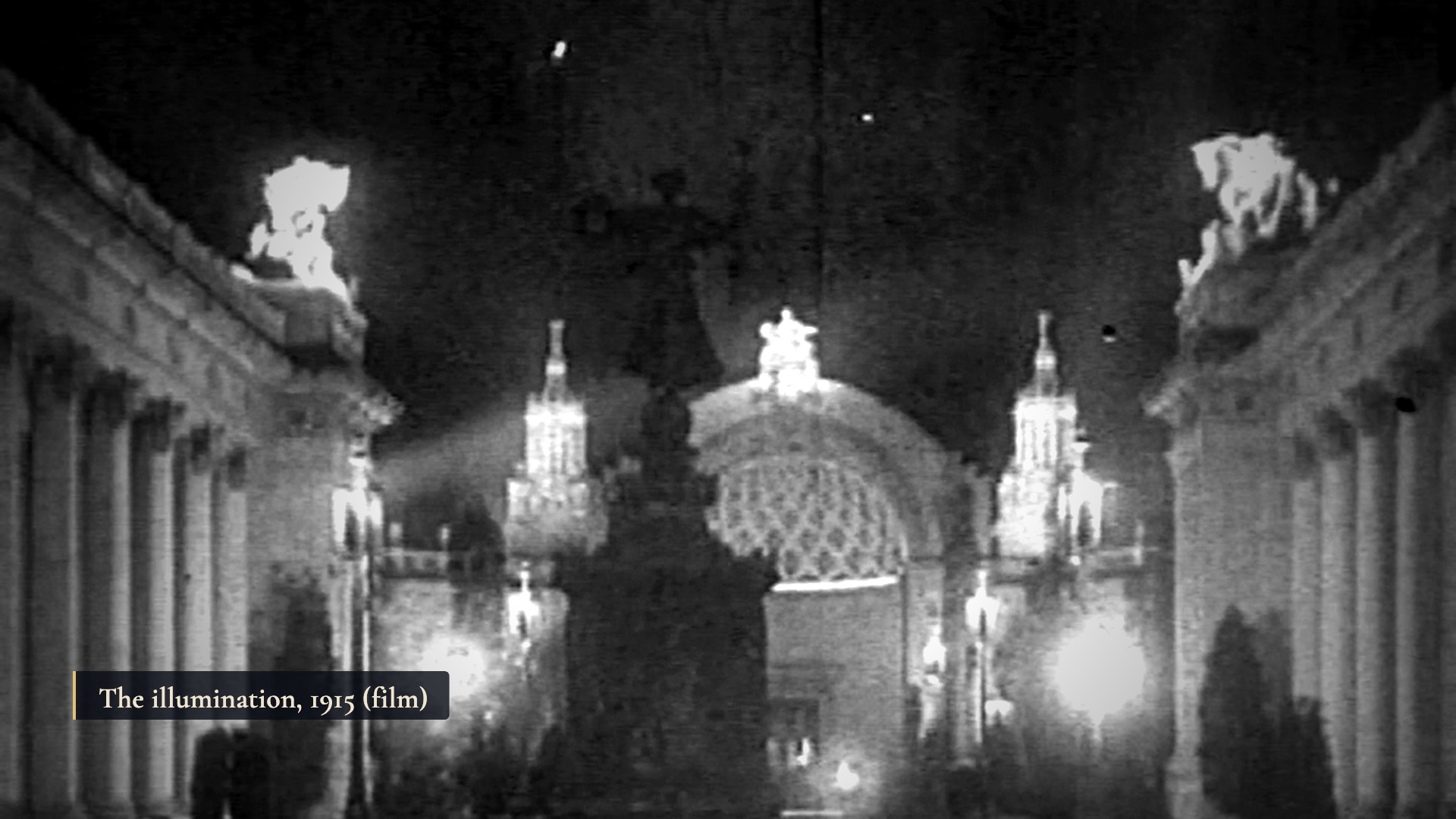
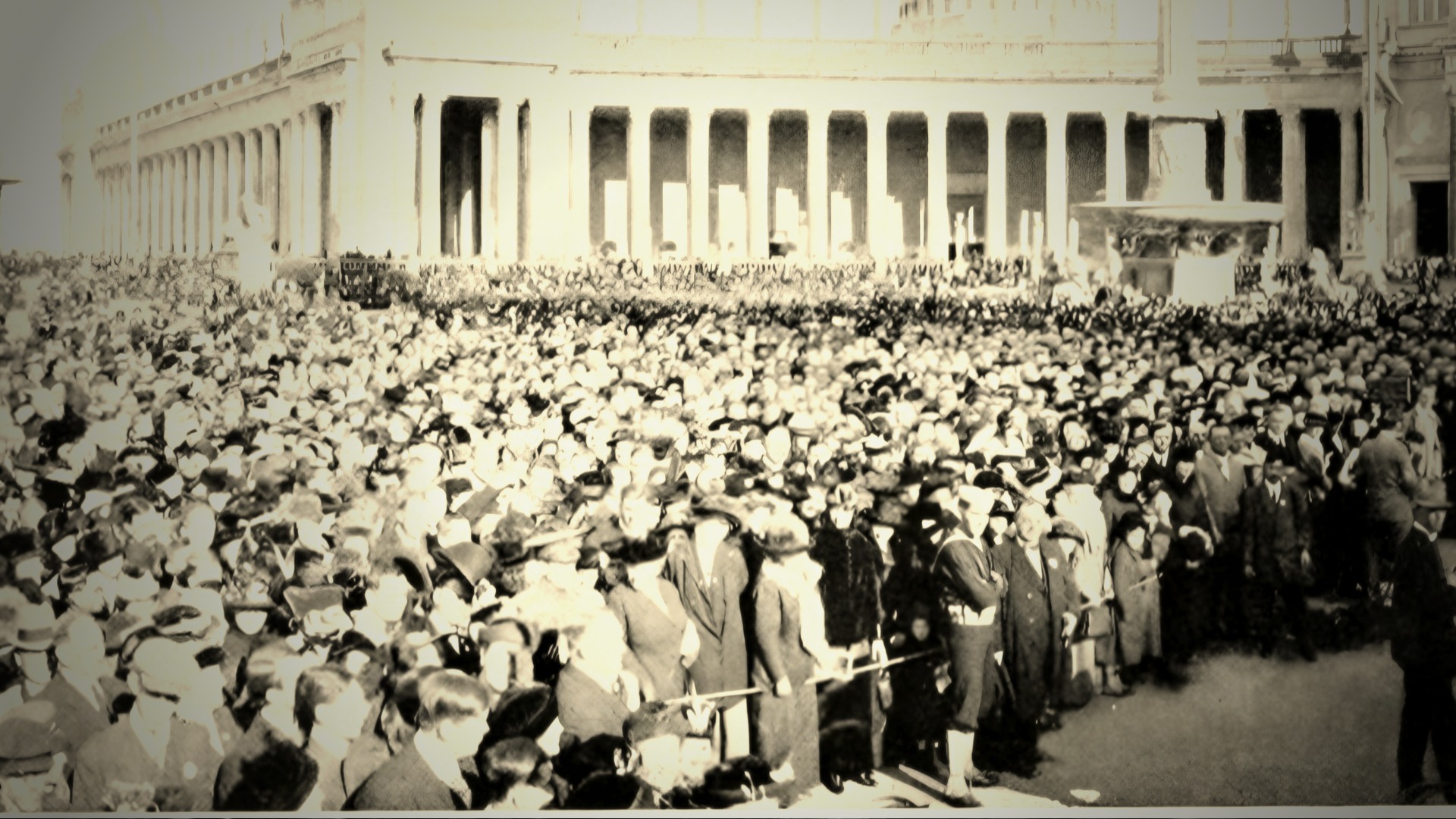
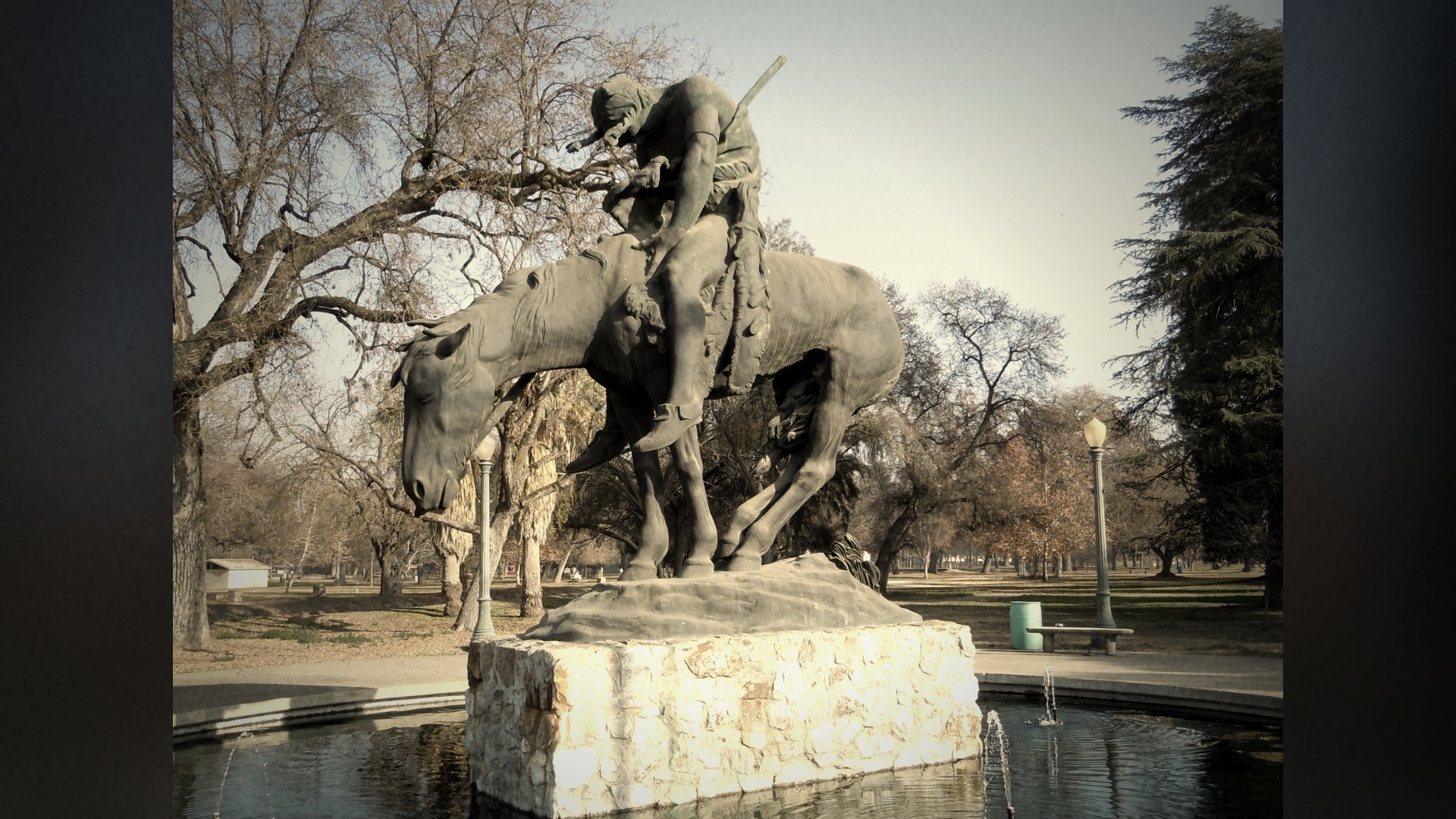
Four frames at 1920 by 1080. Click to download the full size. Credit them to 288 Days / Hollow House Films, and the 1915 material inside them is public domain.
The restoration, before and after
Most of what survives of the fair is a halftone plate in a book: small, screened and faded. Every picture in the film was enlarged and cleaned for the screen. These are single images with both halves in them, sized for print or for a post, and the archive half is the original enlarged with a plain resize, which is what you get without the restoration. Nothing is invented or painted in. Click for the full size.
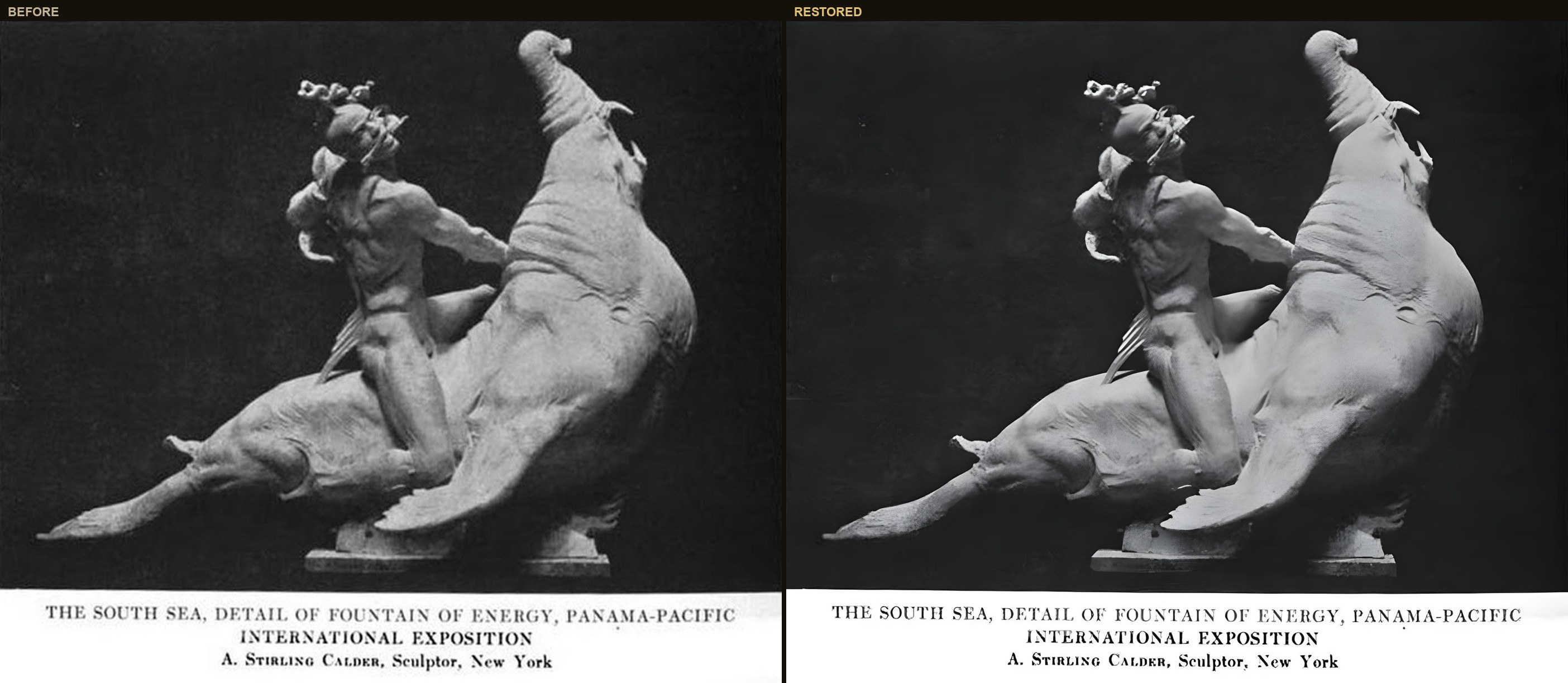
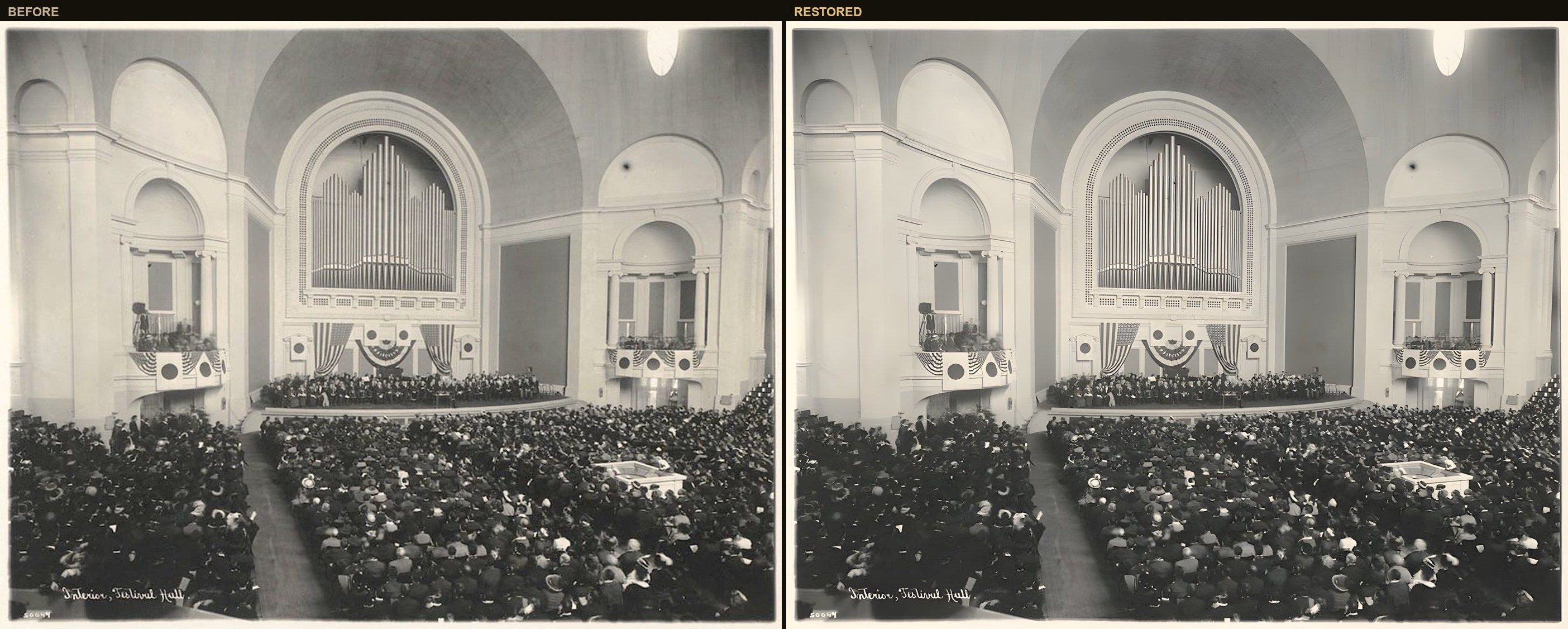
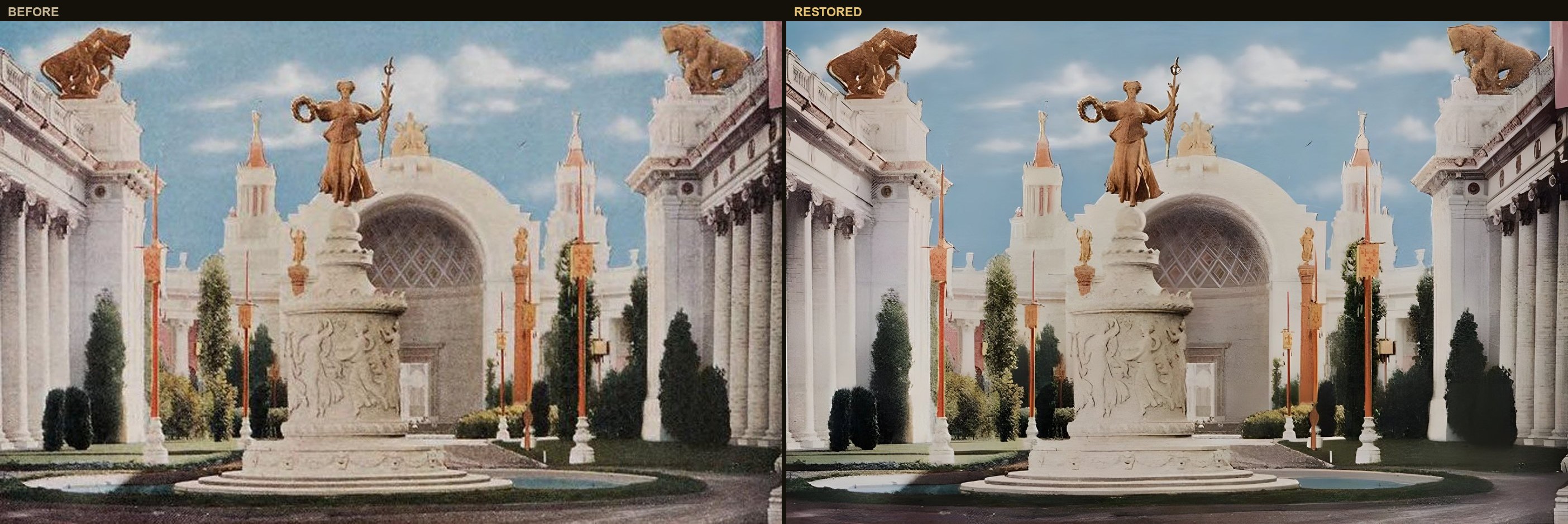
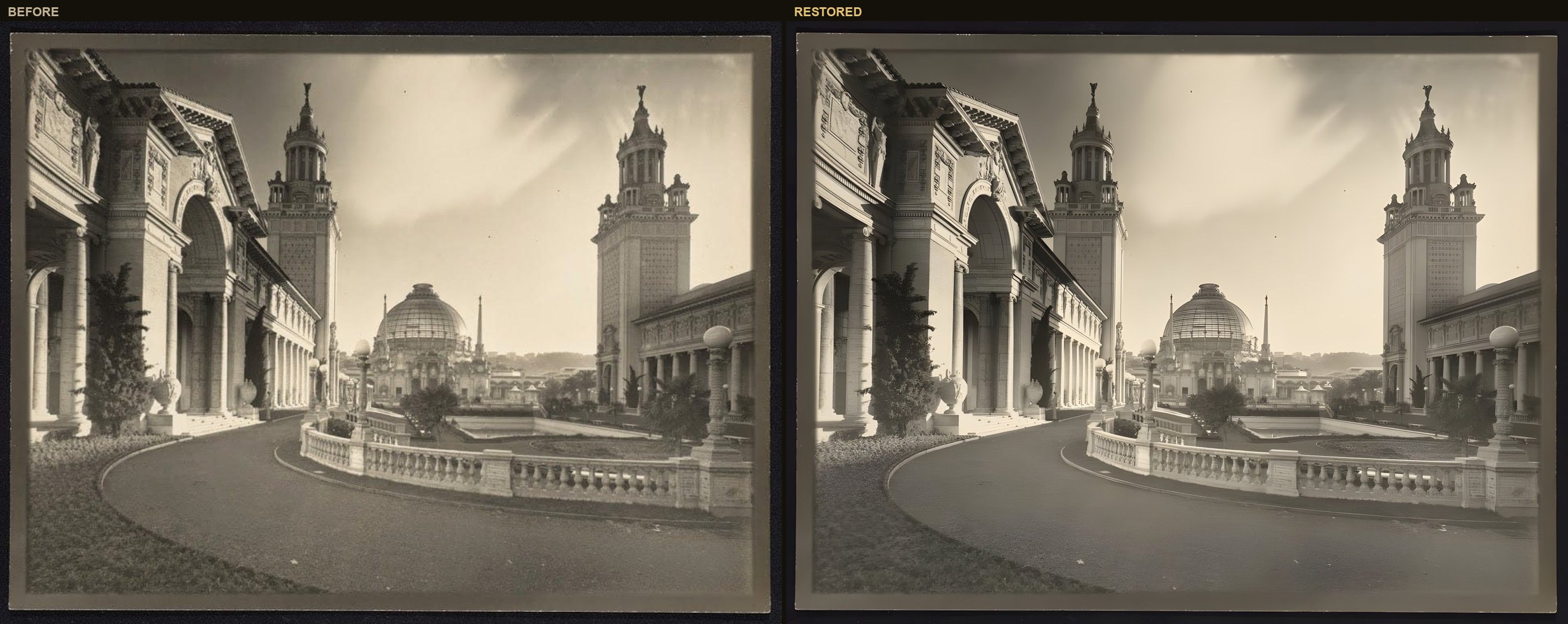
Draggable versions of all four are on the production page. The 1915 originals are public domain; credit the restored versions to 288 Days / Hollow House Films.
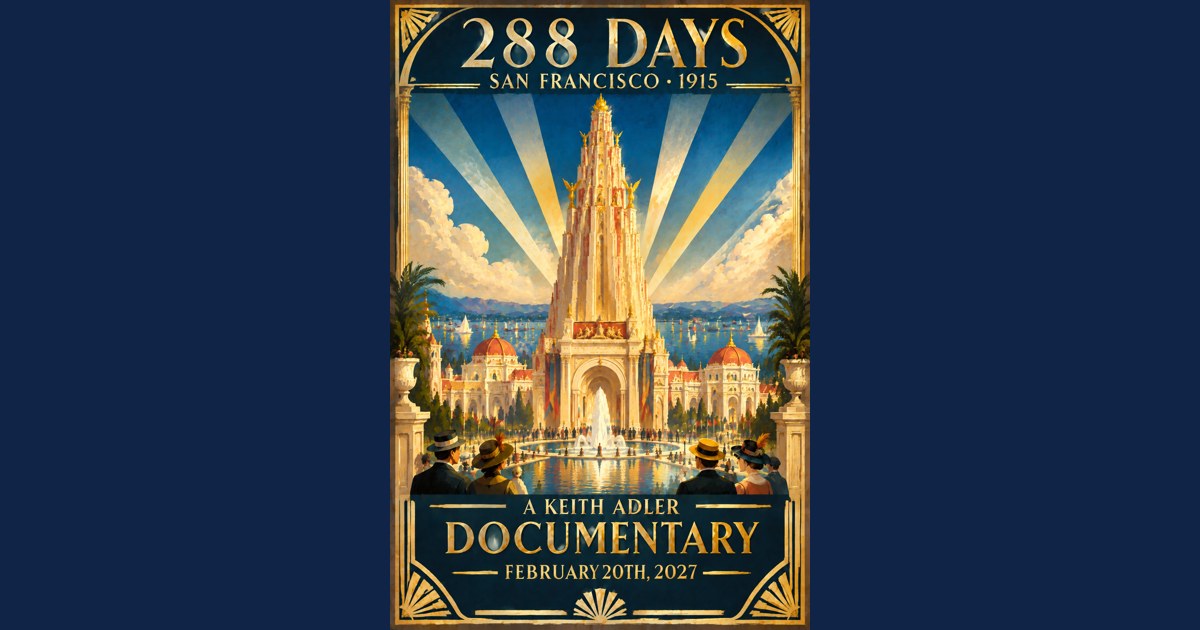
Also available: the poster image and the map of the fairground over today's streets. Ask for anything else.
Three stories in it, if you need one
- Your readers live on it. The site will tell anyone what stood on their own address in 1915. Most of Chestnut Street was the fair's southern edge. The Palace of Machinery, the biggest building at the fair, stood by the Fillmore Street gate, on blocks that are houses now. Try an address.
- The ground that failed in 1989 is the ground the fair made. The Exposition was built on sand and bay mud pumped up behind a seawall, and in the Loma Prieta earthquake the worst damage in the Marina fell on that fill.
- It was not only beautiful. The fair drew a color line in its hiring and its shows, had the Somali performers who struck over unpaid wages held on Angel Island and deported, and gave the eugenics movement a booth in the Palace of Education. Delilah Beasley, whose 1919 history of Black Californians records that a Black schoolgirl, Virginia Stephens, was the first to suggest the name Jewel City, wrote the fair's Black history.
Terms
There is no embargo, no exclusive and nothing to sign. The film is free to watch now and will be free forever. Reproduce the stills and quote the text without asking. If you write something, a link to 288days.com is all that is wanted.