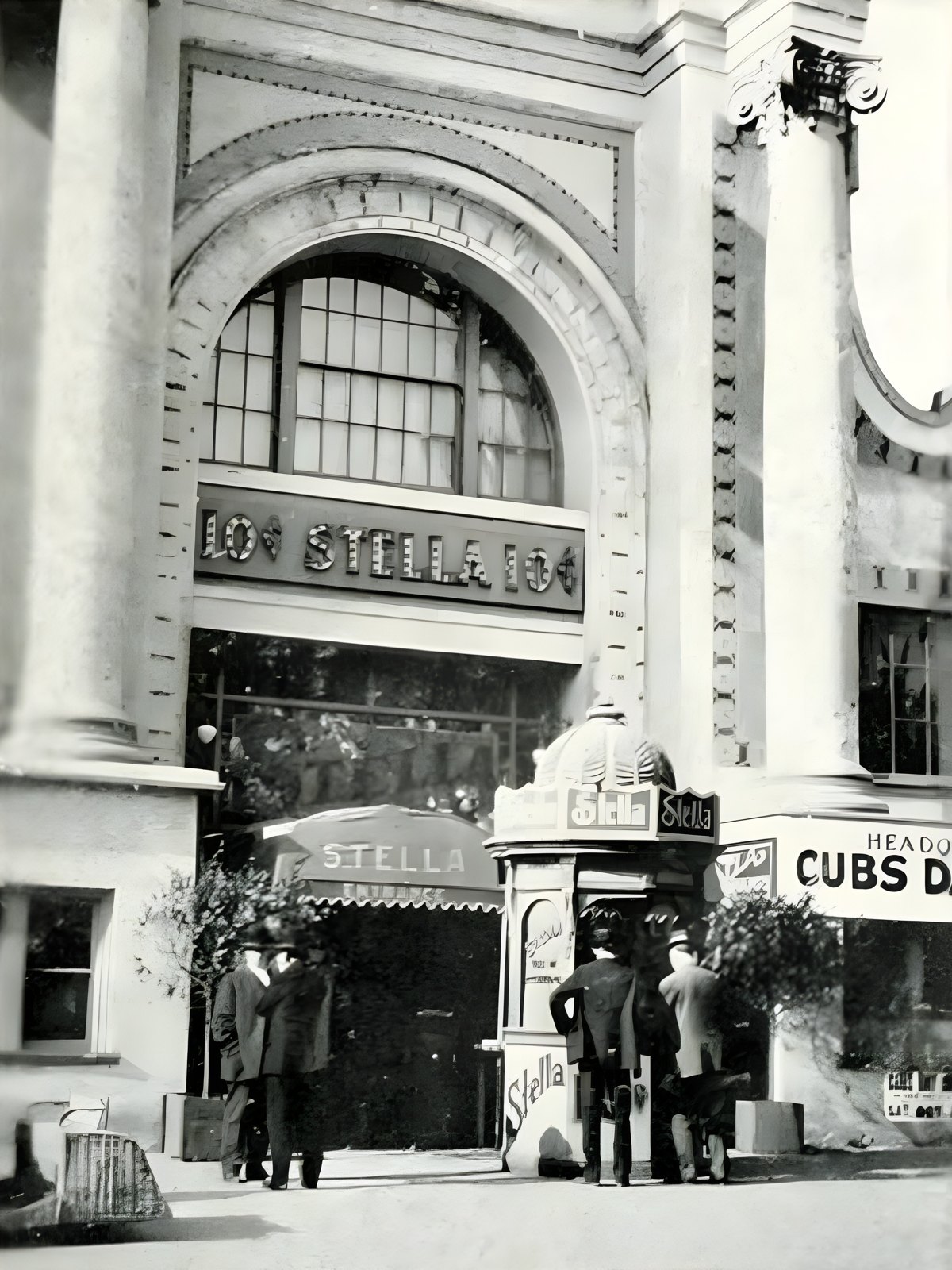
Stella was a large and fairly pretty painting of a nude woman, by the Verona painter Napoleone Nani. She had toured the country without much success and ended up in a St. Louis garret. Her owner, Norman Vaughan, dusted her off and brought her to San Francisco, where she became the hit of the Zone. She hung in a deep frame with cleverly placed lights, so that people argued over whether she was a painting or a living tableau.
The overhead was small. The little theater had no seats, so visitors seldom stayed more than two minutes, and the dimes flowed without stopping. Stella took in over $75,000, and the Exposition allowed no rival. "Have you seen Stella?" became a popular saying and a stage joke. Todd pointed out that a dozen nudes by great modern painters hung free of charge in the Palace of Fine Arts. He called her success a mystery.
"Have you seen Stella?" was a popular formula, and she was the only feature of the Zone, as far as the writer remembers, that became the subject of a stage gag.
Frank Morton Todd, The Story of the Exposition, vol. 2, p. 375 (1921)
