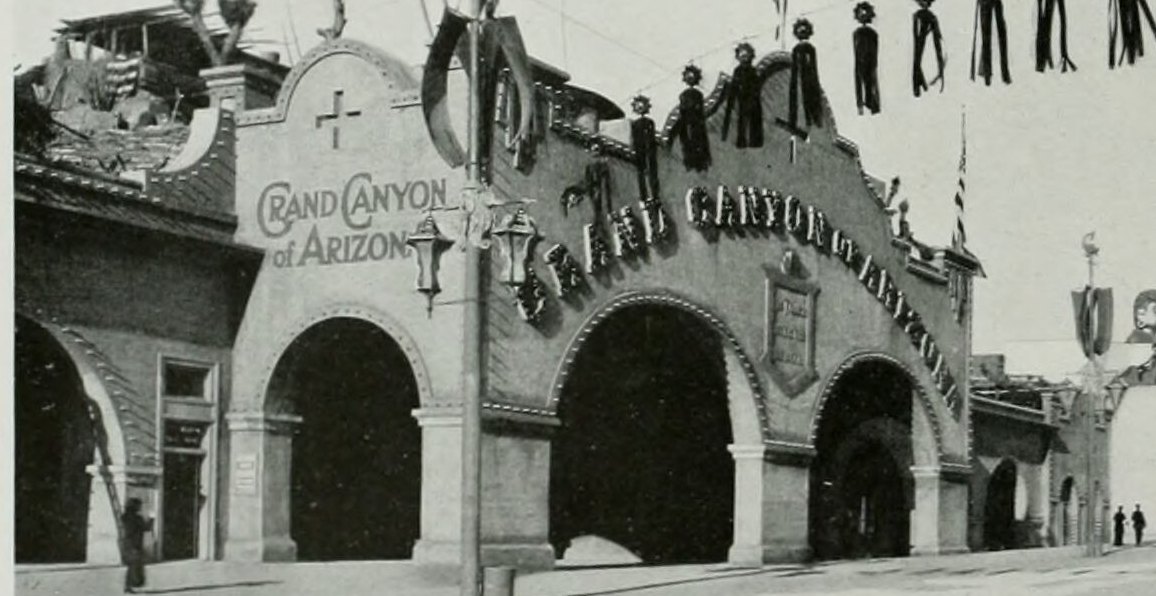
The Atchison, Topeka & Santa Fe Railway made the first real start on the Zone, laying sewers, gas and water pipes for its concession as early as March 1913. W. F. Sesser, manager of the railroad's exhibits, had long wanted to build a Grand Canyon, and here he had room for one. The Santa Fe took about five acres with 300 feet of frontage. It engaged the scene painter Walter W. Burridge (Todd spells it Burredge), who spent two months sketching at the canyon and died in June 1913; who finished the vast field of realistic scenery is not recorded in the sources consulted. Visitors boarded eight standard-gauge passenger cars, open on one side, and rode from the Zone entrance out along the rim of the painted gorge.
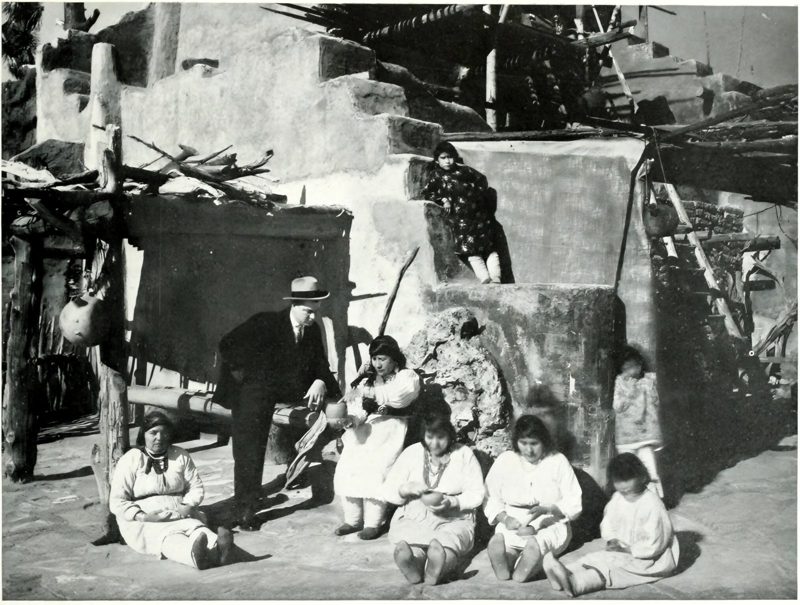
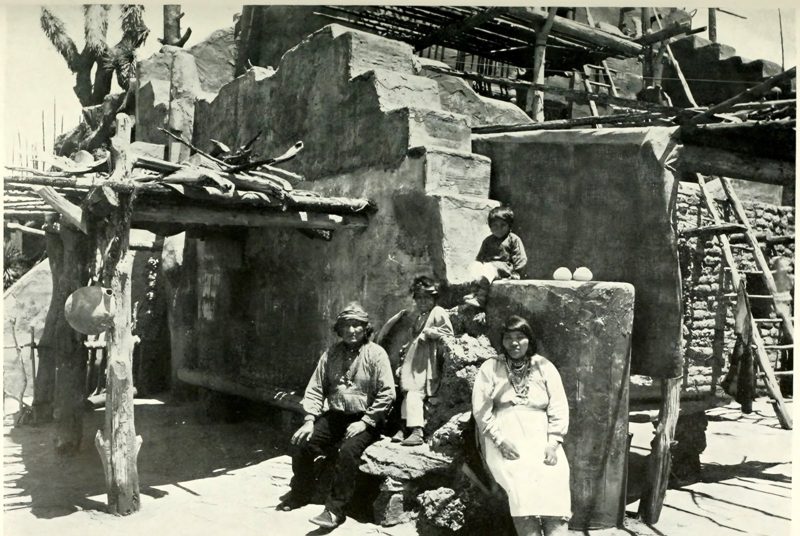
The entrance building was a show in itself. On its roof stood a large pueblo, reached by rock trails and ladders. Some twenty Zuni and Hopi families, brought by the Santa Fe, lived in it through the season and made pottery there, and the Blue Book billed the village as 'The Life of a Vanishing Race.' Artists came to sketch it rather than travel to the reservations. Fred Harvey, famous for the Santa Fe's station restaurants, sold Navajo blankets and curios there. During the fair the Daughters of the American Revolution kept their headquarters in the front of the building.
Crowds came, but the price of building it at a scale that could suggest the real canyon was never repaid. The Grand Canyon took in nearly $90,000, some of it from blanket sales at the Hopi village, against a construction cost Todd put "near $350,000."